

Intro: The Myth That Won't Die
In the IT industry, there's a mantra heard for years: "If you're a junior, you must work for free to gain experience and portfolio." An online store for $75? A business card site for a handshake? "It's an investment in yourself" — say junior developers, persuaded by more experienced ones. The reality is brutal: this is the biggest trap you can fall into. And you're destroying not only yourself but the entire market.
Over 380,000 freelancers work in Poland alone, and their number is growing by 10% annually. Many start with the myth of needing to work for free. Almost everyone who believed it regrets it — but before they realize, they've already taught clients that their work is worth pennies. [youtube]
This is not a moralizing article. This is economics. And the economics of destroying your own future is ruthless.
1. You Ruin Your Future (And Teach the Market You're Cheap)
It starts with one project
When you take an order for $75 for "portfolio", you teach a specific client the price you can earn. This lesson is very hard to unlearn.
Research on client expectation management shows that the first interaction sets standards for all future transactions. When a client pays $75 for a store, their brain remembers: "Stores are worth $75." When a year later you tell them you now charge $1000 for a similar project, their reaction will be: "Why do you suddenly want so much?". You forget you worked there first, but he only remembered the price. [pmi]
The market learns the hard way
A freelancer on Reddit described exactly this problem: he earned 13% less with an old client than with others because he agreed to a discount at the beginning. What happened? That client became the MOST DEMANDING. Consistently delaying payments, asking for more details in invoices (consuming extra time), and when the freelancer proposed a raise, threatening to leave — the client replied: "Then make it cheaper". [reddit]
Why it takes years to recover
The Harvard Business Review platform analyzed the "price anchoring" effect — once a person has paid you X, that remains their reference point. Even when you raise the price by 5%, it may reduce their willingness to hire you more than if you had asked for a higher amount upfront. [go.sandler]
Fact: A junior developer working for a year for one client for $2.50/hour teaches that client he is worth $2.50/hour. When after a year of work he changes his mind and says: "Now I want $25/hour", the client hears it as "you got me, but now I'll have to look for someone else". And he looks.
2. Lack of Respect for Time — Mathematics of Poverty
How long does a $75 store really take?
Whether you are learning or are a junior — the simplest online store takes a minimum of 20-30 hours of work. This isn't a guess. Experienced freelancers know how long it takes:
- Store setup (config, domains, SSL): 3-5 hours
- Payment gateway integration: 2-3 hours
- Product table: 3-5 hours
- Email templating, newsletter: 2-3 hours
- Tests, fixes, browser compatibility: 5-8 hours
- Client revisions (always there): 3-5 hours

That's 20-30 hours. At $75 that's $2.50 - $3.75 per hour.
Context: That's 3x less than a McDonald's worker
From January 2026, the minimum hourly rate in Poland is $7.85 gross. A fast-food restaurant employee often starts at $8-$9 gross (depending on location), which gives about $6-$7 net "in hand".
Wait. You, a qualified IT specialist, take $3/hour. A McDonald's worker takes $6/hour net. But he:
- Doesn't have to develop technologically after hours
- Is not exposed to industry change risks
- Has an employment contract and insurance
- Has learned processes
You must stay up to date, maintain skills, manage yourself as a business, have insurance, pay taxes. And you earn less. [abill]
Respect for time
This is the ideological part. Your time is your only resource. You sell fragments of it. When you give 30 hours for $75, you are not investing — you are losing. You lost something:
- 30 hours of earning at market rate ($40/h = $1200)
- 30 hours of finding real clients
- 30 hours of learning skills that might be useful
- 30 hours of rest (burnout is real)
If you think "it will pay off when I'm known" — that's the sunk cost fallacy. You already lost. Nothing will return it.
3. Concrete Numbers from the IT Market
| Role | B2B Rate / mo | Contract Rate / mo | Project Rate (Low) |
|---|---|---|---|
| Junior Frontend | $1,750-2,900 | $1,500-2,500 | $9-15/h |
| Junior Backend (Java) | $2,000-3,000 | $1,750-2,500 | $10-17/h |
| Junior Mobile | $2,000-3,000 | $1,750-2,600 | $10-17/h |
| Store for $75 | $75 (Total) | - | $3/h (SERIOUSLY?) |
These are real rates for juniors at the end of 2025. [devsdata]
The average earnings of Polish freelancers increased from 6700 PLN (2021) to 9000 PLN (2023). But this is an average — pulled up by seniors earning 20-30k. Juniors are below this average. And those who take jobs for free/half-price? They weigh it down for everyone. [youtube]
Calculation: What do you really lose?
- $75 Project (25h) $3/h
- $1000 Project (Min. junior market, 25h) $40/h
- Difference $925 loss
That's almost 1/3 of a junior's average monthly salary. One "portfolio" project is a lost month of income. And if you take them systematically, you are burying your career.
4. You Are Part of the Problem: The Race-to-Bottom Effect
How the destructive cycle works
When you take a store for $75, and another junior sits next to you who read the same post on Facebook about "portfolio building", he sees:
- You win the order for $75
- Client learns: "Stores can be had for $75"
- The next junior takes it for $60 to be competitive
- You have to take it for $50
- The market really ends at $12
On Upwork the average freelancer earning is below $20/h after platform fees. That is because people undercut themselves without realizing that they are teaching the market that they are cheap. [maelstromwebservices]

5. The "Portfolio" Myth — The Most Dangerous Illusion
Where is a portfolio made?
Key rule: You build a portfolio in YOUR TIME, on your terms, not on client terms for pennies. If you want strong projects in your portfolio, do them for yourself or pro bono for a charity that needs it (and will give you a reference with a stamp).
If a client pays you, even $75 — it's not a portfolio. It is SELLING work for a bowl of rice.
HungryArtists explain the problem:
"When artists (especially good ones) offer their services for a few dollars an hour, it's sad. You don't have to work for free to learn — practice on your own project until you are sure of your skills. Who thinks now that they will have to pay normally for art?" [reddit]
6. What You Should Do: How It Should Be
1. Stop "For Portfolio"
If a client pays, even $75, it's not a portfolio, it's work. It should be priced appropriately. Do not propose "I'll do it for free for portfolio".
2. Decent Rates
An IT Junior should earn a minimum of $10-15/hour for simpler works, not $3. Do not agree to a complex store for $75.
3. Quality Verification
Do your own projects that are truly yours. Don't sell templates as "custom".
7. How to Escape the Trap (If You Are Already In It)
First: stop. Don't take any more. Second: new clients, new rates.
- Find 5-10 new clients with market rates.
- Serve the old client at the old rate, but don't look for profit there — it's a "necessary evil" (or raise the rate and risk leaving).
- Build a portfolio now on new projects.
Research shows that developers who regularly benchmark their rates earn significantly more throughout their careers. [searchxrecruitment]
8. Long-Term Impact: What Happens in 5 Years?
A: Junior "For Free"
Built a portfolio — but clients are used to paying pennies. Skills are average (fast templates). Earnings still below $2.5k/month. Difference: lost half a million PLN over years.
B: Junior "PRO RATES"
Strong portfolio, demanding projects. Professional reputation. Earnings $4-5k/month after 3 years. Possibility of building own agency.
9. What Should a Client Do Who Hears "For Free"
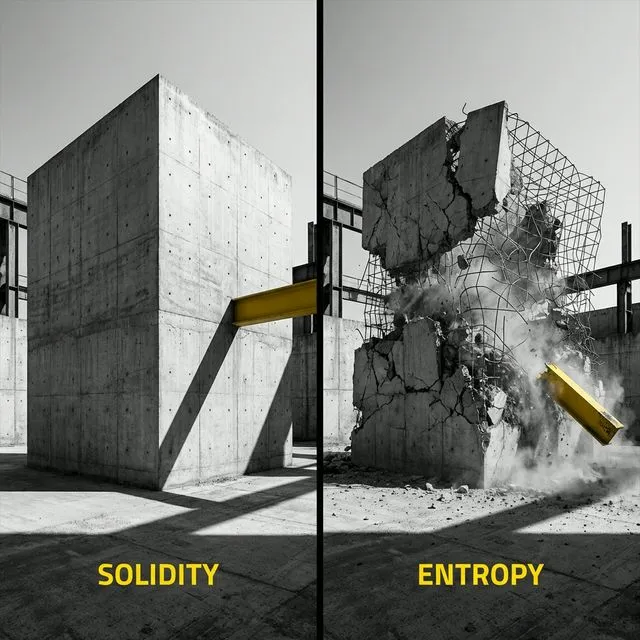
If someone says "I'll do it for free," or "$75 for a store": RUN.
10. Decent Rates: Guidelines (2026)
| Skill | Min. Rate | Reason |
|---|---|---|
| HTML/CSS/JS Start | $10-15/h | Fast-food line |
| Junior Dev (Short) | $25-40/h | Requires experience / Setup |
| Mid Dev (3+ years) | $40-65/h | Speed and quality |
BIBLIOGRAPHY & SOURCES
- Next Technology: Junior Software Developers in Poland (2023) [nexttechnology]
- NInitiative: IT Salary in Poland (2025) [ntiative]
- YouTube: Freelance 2025 (McKinsey data) [youtube]
- DevsData: Polish Developer Salaries (2025) [devsdata]
- Xolo: Freelancer Taxes in Poland (2026) [abill]
- Maelstrom Web Services: Hidden Costs [maelstromwebservices]
- Reddit: Upwork Underpriced Freelancers [reddit]
- Reddit: Artists Stop Undervaluing [reddit]
- PMI: Project Expectation Alignment [pmi]
- Sandler Sales: The Hidden Power of Pricing [go.sandler]